Explore IX Water: Innovative Industrial Wastewater Treatment & Recycling

written by Ellie Cabell

Ammonia is a naturally occurring colorless gas. It is created within the human body and is used by the body to make proteins and other necessary molecules. It is also created in nature when plants, animals, and bodily wastes decay, as well as resulting from bacterial functions. While ammonia is naturally occurring and necessary for human health, it is corrosive externally. According to health.ny.gov,  “Exposure to high concentrations of ammonia in air causes immediate burning of the eyes, nose, throat and respiratory tract and can result in blindness, lung damage or death. Inhalation of lower concentrations can cause coughing, and nose and throat irritation.”
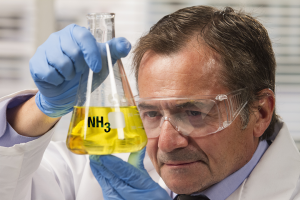
“Exposure to high concentrations of ammonia in air causes immediate burning of the eyes, nose, throat and respiratory tract and can result in blindness, lung damage or death. Inhalation of lower concentrations can cause coughing, and nose and throat irritation.”

“Exposure to high concentrations of ammonia in air causes immediate burning of the eyes, nose, throat and respiratory tract and can result in blindness, lung damage or death. 

Ammonia is toxic to aquatic life. One common way of removing it from water is by converting it to nitrate through autotrophic bacteria, then removing the nitrate through a different bacteria. Two kinds of bacteria are used, and both require precise temperature, pH and other environmental factors, including far more oxygen than is usually required by biological organisms. 

Such exacting requirements for the removal of a toxic compound in our water should be much easier. Researchers should be looking for much easier ways to remove ammonia, or fashion it in to something that could be environmentally beneficial.




https://www.chemicalsafetyfacts.org/ammonia/

https://www.health.ny.gov/environmental/emergency/chemical_terrorism/ammonia_general.htm#:~:text=Ammonia%20is%20also%20produced%20in,is%20commonly%20found%20in%20nature.&text=In%20nature%2C%20ammonia%20occurs%20in,animals%20and%20animal%20wastes%20decay.

https://www.theatlantic.com/business/archive/2012/06/26-trillion-pounds-of-garbage-where-does-the-worlds-trash-go/258234/

https://www.waterworld.com/technologies/article/16194158/addressing-the-challenge-of-removing-ammonia-from-wastewater

Related Posts

Bangladesh needs IX

Bangladesh needs IX

Depending on the season, there are around 700 rivers and tributaries in the country of Bangladesh, and a majority of them are polluted. Some rivers are so polluted the are almost biologically dead, which means that they are no longer able to support life. There are...

Read More

Thames River

Thames River (England) TLDR: Winding through London, the Thames has been a silent witness to everything from Roman invasions to royal coronations. In the 1600s, it froze over so solidly during the “Little Ice Age” that Londoners held Frost Fairs on its...

Read More

0 Comments